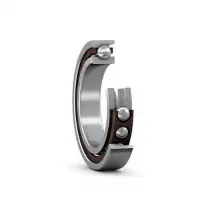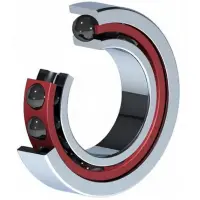
71956 CD/P4A
71900 Series Super Precision Angular Contact Ball Bearings
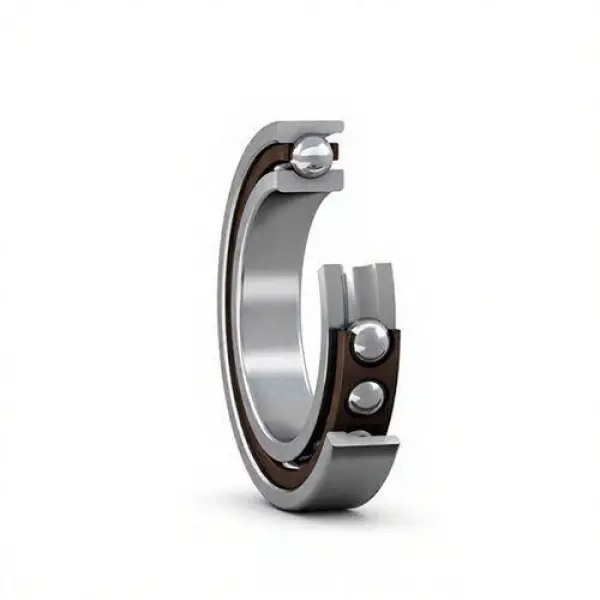

Image may differ from product. See technical specification for details.
Part No.
Part No.
71956 CD/P4A
Basic Information
System of measurement
Metric
Weight
12.9 kg
Tolerance class
P4 (ABEC-7)
Seal type
Open
For load direction
Angular Contact
Main Dimensions
Bore diameter
280 mm
Bore diameter tolerance
-0.013mm to 0
Outside diameter
380 mm
Outside diameter tolerance
-0.015mm to 0
Width
46 mm
Width tolerance
-0.24mm to 0
Contact angle
15 °
Ball & Washer Dimensions
Ball diameter
30.162 mm
Ball quantity
31
Performance
Temperature range
-30° to 110 °C
Radial dynamic load rating
65475 lbf
Radial static load rating
102375 lbf
Limiting speed
4.5 X 1000 rpm
Lubrication
Lubricated
Matched arrangement
Single
Preload
Available
Materials
Ring material
Chrome Steel
Ball material
Chrome Steel
Cage material
Phenolic
Technical Drawings
No drawings available at the moment, will be launched soon
Price:
$ 8152.37
/ each
In Stock
- Fast delivery
- Free shipping on orders over $200
- Enjoy discounts on bulk purchases
- Secure Payment
- Fast Global Shipping
71956 CD/P4A Bearing Product Overview & Core Advantages
The 71956 CD/P4A is a high-precision angular contact ball bearing designed for demanding applications requiring exceptional rotational accuracy and rigidity. Engineered to a P4 (ABEC-7) tolerance class, it delivers superior running precision. Its key advantage lies in its ability to accommodate combined loads, efficiently handling both radial and substantial axial loads in one direction. The preload availability ensures minimal axial and radial play, resulting in high system stiffness, precise shaft positioning, and reduced vibration and noise levels, making it ideal for high-performance machinery.
71956 CD/P4A Bearing Model Code Explained, Specifications & Naming Convention
| Code Segment | Technical Meaning |
|---|---|
| 71956 | Basic bearing series number, defining the fundamental dimensions: 280mm bore, 380mm outside diameter, 46mm width. |
| CD | Indicates a specific contact angle of 15° and optimized internal design for high axial load capacity and rigidity. |
| P4A | Denotes the tolerance class P4 (ABEC-7), signifying very high dimensional and running accuracy. The 'A' suffix may indicate specific accuracy or feature variations within the P4 class. |
71956 CD/P4A Bearing Structural Features & Performance Benefits
- High Rigidity and Precision: Manufactured to P4 precision class with a 15° contact angle, this bearing provides exceptional rotational accuracy and system stiffness, crucial for applications like machine tool spindles.
- Superior Load Capacity: The optimized internal geometry, including a ball diameter of 30.162 mm and 31 balls, enables high dynamic and static load ratings (65475 lbf / 102375 lbf), reliably supporting significant combined loads.
- High-Speed Capability: The lightweight and robust phenolic resin cage ensures stable operation and guides the balls effectively, contributing to the high limiting speed of 4,500 rpm.
- Durable Construction: Components made from chrome steel offer high hardness, wear resistance, and a long service life under demanding operating conditions.
- Preload & Temperature Range: The availability of preload enhances system rigidity. The bearing operates effectively within a temperature range of -30°C to 110°C.
71956 CD/P4A Bearing Typical Application Areas
This precision angular contact bearing is ideally suited for high-performance machinery where accuracy, speed, and rigidity are paramount. Key applications include:
- Machine Tool Spindles: For high-speed milling, grinding, and turning centers.
- Precision Gearboxes: Especially in high-power, high-speed industrial drives.
- High-Frequency Motors and Spindles: Used in PCB drilling and other precision machining.
- Industrial Pumps and Compressors: For handling axial and radial loads in rotating assemblies.